
How to Protect Your Caravan Interior from Sun Damage
Posted by Editorial Team on
Table of Contents
- How UV Radiation Damages Your Caravan Interior
- Step 1: Block UV Rays at the Windows
- Caravan Window Shade vs Thermal Curtains: Which Works Better?
- Step 2: Find the Best Caravan Window Insulation for Your Setup
- Step 3: Preventing UV Damage to Caravan Upholstery and Surfaces
- Step 4: Reduce Cabin Heat During Storage
- DIY vs Professional Application: What Works Best
- Frequently Asked Questions
Last Updated: September 25, 2026
How UV Radiation Damages Your Caravan Interior
UV radiation is the leading cause of interior fading and cracking in caravans, and the damage starts the moment sunlight passes through your windows.
Ultraviolet rays carry enough energy to break the chemical bonds in fabrics, plastics and vinyl. The result is a slow chain reaction you won't notice for months. By the time the damage shows, it can't be reversed.
Here's what happens to each material over time:
- Upholstery and cushions: colours fade, fibres turn brittle, seams split
- Dashboards and trim: surfaces dry out, crack and turn chalky
- Vinyl and leather: lose their oils, then shrink and peel
- Plastics: yellow, then become brittle and snap
- Timber veneers: bleach unevenly and lift at the edges
The Bureau of Meteorology's UV index guidance confirms that UV levels in many parts of the country regularly reach extreme ratings, which is why caravan sun damage is such a common problem for travellers.
Step 1: Block UV Rays at the Windows
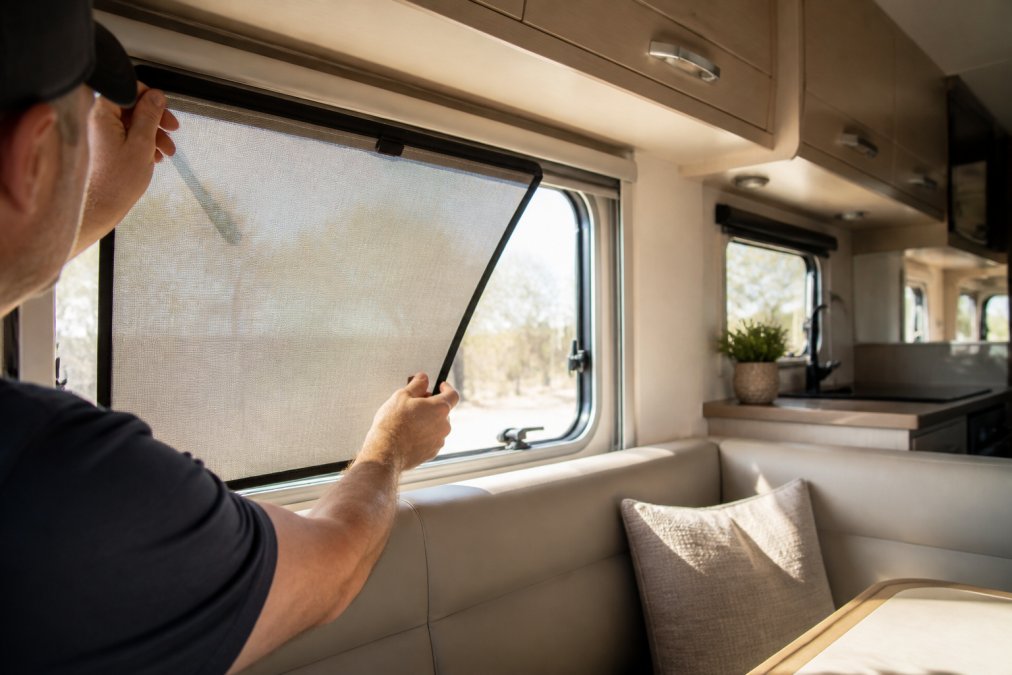
The fastest way to protect your caravan interior from sun damage is to stop UV rays at the glass. Window insulation is the single highest-impact change you can make, and it works from day one.
Why Windows Are the Weak Point
Glass blocks some UVB but lets most UVA straight through. UVA is the type that fades fabric and cracks plastic over time.
Every uncovered window acts like a magnifying glass for your interior. The larger the glass and the more direct the sun, the faster the damage builds.
Caravan Window Shade vs Thermal Curtains: Which Works Better?
A caravan window shade blocks light and UV at the surface of the glass, while thermal curtains add a layer of insulation that also slows heat transfer. For pure sun protection, a reflective shade wins.
The difference comes down to how each one works:
| Feature | Window Shade | Thermal Curtains |
|---|---|---|
| Blocks UV rays | Yes, at the glass | Partly, once closed |
| Cuts cabin heat | High | Moderate |
| Fits while driving | Usually removed | Often fixed |
| Best for | Direct sun and storage | Night-time warmth |
A reflective shade keeps the sun's energy outside the van. Curtains trap some heat between the fabric and the glass, which helps, but they can't match a proper block-out screen.
Step 2: Find the Best Caravan Window Insulation for Your Setup
The best caravan window insulation is a custom-fit, block-out screen that reflects UV before it enters the van. Generic shades rarely seal properly, and gaps let the sun straight through.
Solarscreen is the pick here. It's Australian Made, custom-cut to your window, and blocks both UV and glare. RvOptions stocks the Solarscreen Rear Window for Motorhomes at $110.00, which can be custom-made to your specific motorhome's rear window dimensions.

What sets a custom screen apart:
- It seals the full window, so there are no UV gaps
- It keeps valuables out of sight, which adds security
- It helps your fridge run more efficiently by cutting heat load
- It fits and removes with no tools, so setup takes seconds
A common mistake is buying a one-size-fits-all shade. If it doesn't sit flush, you're only blocking part of the sun, and the rest still cooks your trim.
Step 3: Preventing UV Damage to Caravan Upholstery and Surfaces
Preventing UV damage to caravan upholstery comes down to two habits: shade the interior, then treat the surfaces that remain exposed. Screens do the heavy lifting, and treatments handle the rest. What most guides miss is that caravan interiors use different materials to cars, and each one needs a different approach.
Fabric and Cushion Care
Fabric is the first thing to fade. Turn cushions regularly so wear and sun exposure stay even. Keep a spare throw over the sunniest seat, and wash covers with a gentle detergent rather than harsh chemicals.
Caravan upholstery is usually a polyester or acrylic blend over foam, and the foam matters as much as the cover. UV breaks down the foam's cell structure over time, so a faded cover often hides a crumbly cushion underneath. If you can, unzip covers and check the foam every season.
Dashboard, Trim and Vinyl Protection
Hard surfaces dry out and crack when UV strips their oils. Wipe vinyl and plastic with a UV protectant spray every few months. A vinyl conditioner restores flexibility, and a leather treatment keeps leather soft and supple.
Acrylic Windows and Tinted Panels
Caravan acrylic windows are a special case. They scratch easily, and many tinted films and sprays are not compatible with acrylic. Use only products labelled safe for acrylic, and clean with a microfibre cloth and mild soap rather than an ammonia-based cleaner, which can cloud the surface. If you want to add tint, choose a film rated for acrylic rather than glass, because the adhesive on glass film can react with the acrylic over time.
Step 4: Reduce Cabin Heat During Storage
Cabin heat during long-term storage is what accelerates material degradation, so your goal is to keep the van cool and ventilated while it sits. Heat and UV work together, and each one makes the other worse.
A few steps make a real difference:
- Fit block-out screens on all sun-facing windows before you park
- Crack a roof hatch or vent to let hot air escape
- Park with the sun hitting the least-used side of the van
- Use a cover or shade cloth over the exterior where you can
- Check on the van monthly and air it out
DIY vs Professional Application: What Works Best
DIY protection works well for most owners, and professional detailing is only worth it for full ceramic coating jobs. You can handle screens, sprays and covers yourself in an afternoon. The real question is where the line sits between the two, and what each option actually costs you in time and money.
What You Can Do Yourself
Most sun protection is genuinely DIY-friendly:
- Screens and shades: fit yourself in minutes, no tools
- Protectant sprays and wax: wipe on at home
- Fabric guard: spray cushions and let them dry
- Ventilation setup: crack a hatch or vent before storage
These tasks need no special skill, and the products are widely available. The main cost is your time, and the main risk is inconsistency rather than damage.
Where Professional Help Pays Off
Ceramic coating is the exception. It bonds a polymer sealant to paint and glass, and a proper application takes skill. If you want that level of protection, a professional detailer is the safer route.
A Practical Rule of Thumb
Use this to decide:
- High-sun, high-value surfaces (front cap, large windows, dashboard): consider professional coating if the van is stored outside
- Interior fabrics and trim: DIY, reapplied seasonally
- Acrylic windows: DIY only, with acrylic-safe products
- Full-van ceramic: professional, and only if you plan to keep the van long-term
The one thing most guides miss is consistency. A single coat of wax won't last a summer. Reapply protectant every few months, and your interior will hold up far better over the years.
Frequently Asked Questions
How can I block UV rays from entering my caravan windows?
Custom-fit insulated window screens are the most effective option. They block UV rays and glare while reducing heat build-up inside the van. Australian Made Solarscreen products are custom-made to your window dimensions and simply press into place without tools. Pair them with a windscreen sunshade for the cab area. Unlike tinting, which still lets some UV through, block-out screens stop the rays at the glass before they reach your upholstery and trim.
Are thermal curtains effective against caravan interior sun damage?
Thermal curtains help reduce heat and block some light, but they usually leave gaps around the edges where UV rays still enter. They also sit further from the glass, so heat builds up between the curtain and the window. Insulated block-out screens fit flush against the window and block UV more completely. For full protection, use screens on the windows you can fit them to, and keep curtains closed on any remaining exposed glass.
Does UV exposure cause permanent damage to caravan upholstery?
Yes. Over time, ultraviolet rays break down fabric fibres and cause fading, cracking and weakening of upholstery, vinyl and dashboard plastics. This damage cannot be reversed, so prevention is key. Use window insulation screens, apply a UV protectant spray or conditioner to vinyl and leather surfaces, and consider fabric guard for cushions. Regular treatment every three to six months keeps materials supple and slows the effects of sun exposure.
What is the difference between window tinting and thermal shades for sun protection?
Window tinting is a film applied directly to the glass that reduces UV and heat to some degree, but it is permanent and does not insulate. Thermal shades, like custom insulated screens, are removable panels that block UV, reduce heat transfer and provide privacy. They cost less than professional tinting, require no installation, and can be taken down when you want full light. For caravan owners, removable screens are usually the more practical choice.
Sun damage is a slow problem, but it's one you can stop before it starts. RvOptions has helped travellers protect their vans since 2009, and our Australian Made Solarscreen range is the simplest fix for any caravan. With custom-fit window insulation, hatch covers and a partnership with the Campervan & Motorhome Club of Australia, we stock gear we trust in our own vehicles. Get started with RvOptions and keep your interior cooler, brighter and protected for every trip ahead.
Share this post
- Tags: best caravan window insulation, caravan sun damage, caravan window shade vs thermal curtains, preventing uv damage to caravan upholstery, protect caravan interior from sun damage