How to Verify Australian Made RV Gear: 2026 Guide
Posted by Editorial Team on
Table of Contents
- Why Verifying Australian Made RV Gear Matters Before You Buy
- What the Australian Made Logo Actually Guarantees
- The Two Thresholds: Made in Australia vs Product of Australia
- ACCC Country of Origin Guidelines: What Sellers Must Tell You
- The Difference Between Australian Owned and Australian Made
- How to Spot Fake Australian Made Labels on RV Gear
- Where to Check Australian Made RV Gear Claims Before You Buy
- Common Mistakes Buyers Make When Checking RV Gear Claims
- Frequently Asked Questions
Last Updated: September 12, 2026
Why Verifying Australian Made RV Gear Matters Before You Buy
If you're planning a big lap or a summer run up the coast, knowing how to verify australian made rv gear is the difference between gear that lasts a decade and gear that fails at a free camp in the middle of nowhere. This guide from RvOptions walks through exactly what the logos mean, what sellers are legally required to disclose, and how to check a claim in under five minutes.
Here's the part most buyers miss: a "Made in Australia" claim isn't a marketing slogan, it's a regulated statement with legal weight behind it. Get it wrong and you're not just out of pocket, you're relying on imported gear that was never built for heat, corrugations or long-term UV exposure.
Below, we'll show you how to verify Australian made rv gear claims step by step, the two thresholds that separate "Made in" from "Product of", and the label tricks that catch buyers out.
What the Australian Made Logo Actually Guarantees
The green and gold kangaroo logo is a certification mark, not a free-for-all sticker. It's administered under a formal code of practice, and a business must be licensed to use it.
What the logo tells you:
- The product was made or substantially transformed in Australia
- The business has been assessed against country of origin criteria
- The claim is subject to ongoing compliance checks
What it does not tell you is that every component is Australian. A licensed product can still contain imported parts, provided the final significant transformation happened here. That distinction matters when you're comparing insulation panels or window screens.
The Two Thresholds: Made in Australia vs Product of Australia
These two phrases are not interchangeable, and sellers sometimes blur them. The difference comes down to where the ingredients or components come from.
Made in Australia means the product was substantially transformed here. It can contain imported components, as long as the transformation happened onshore and the claim is accurate.
Product of Australia is the stricter standard (accc.gov.au). Every significant ingredient or component must originate in Australia.
For RV gear, this is the distinction that decides whether a window insulation panel is genuinely built for our conditions or assembled from imported materials with an Australian sticker attached. If you're a grey nomad doing the big lap, the difference shows up years later in how the product handles heat cycling and UV.
ACCC Country of Origin Guidelines: What Sellers Must Tell You
The ACCC country of origin guidelines set out what a business can and cannot claim about where a product comes from. Country of origin claims are regulated under Australian Consumer Law, and a misleading claim can trigger penalties (accc.gov.au).
In practice, sellers must be able to substantiate any origin claim they make. That means:
- A "Made in Australia" claim needs evidence of substantial transformation here
- A "Product of Australia" claim needs evidence that all significant components are local
- A logo used without a licence is a compliance problem, not just a branding choice
If a claim looks vague, that's usually deliberate. Phrases like "Australian owned" or "designed in Australia" carry no origin guarantee at all. For more detail on how the regulator treats these claims, see the ACCC country of origin guidance.
The Difference Between Australian Owned and Australian Made
Australian owned and Australian made describe two completely different things, and conflating them is the single most common buying mistake.
Australian owned means the business is owned by Australian residents. It says nothing about where the product is manufactured.
Australian made means the product itself was substantially transformed here.
A company can be fully Australian owned and import every product it sells. That's legal, it's common, and it's why the two phrases get used interchangeably in marketing even though they mean opposite things. When you're assessing gear for a long-term setup, ask which claim is actually being made. If the answer is "we're an Australian company", you haven't learned anything about the product.
How to Spot Fake Australian Made Labels on RV Gear
Fake or unlicensed labels usually give themselves away through small inconsistencies. A genuine certified product carries a licensed logo, a clear origin statement, and a business that can be found in the official register.
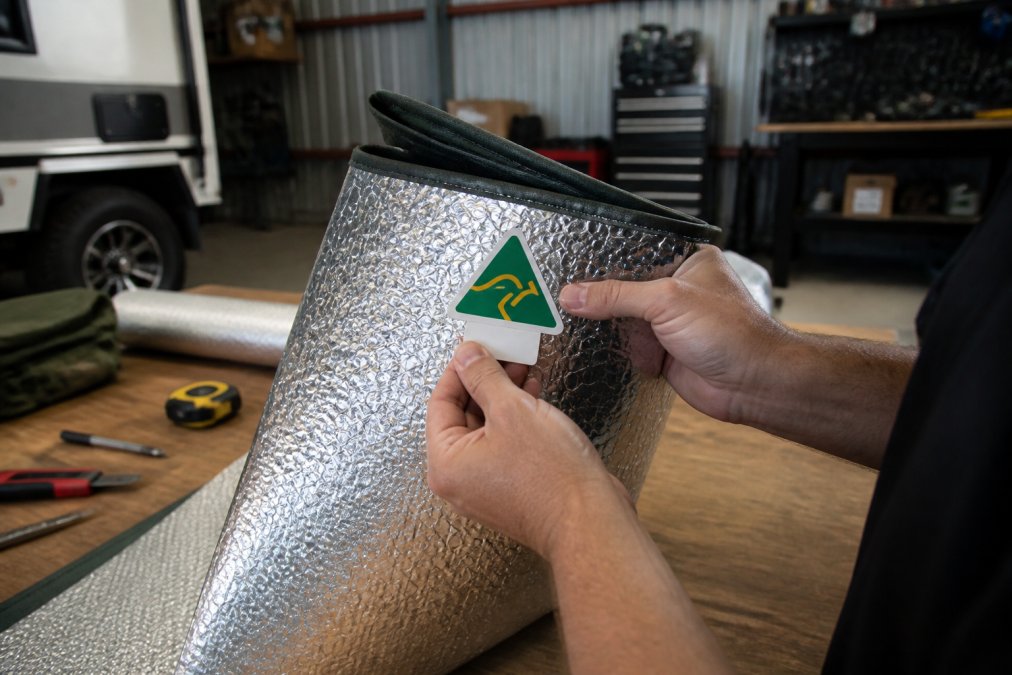
Red flags to watch for:
- The logo appears but no licence number or business name is traceable
- The wording says "Australian style", "Aussie designed" or "local brand" instead of a regulated claim
- The country of origin statement is missing from the packaging entirely
- The seller can't name the manufacturer when asked
A real certification is verifiable. A fake one relies on you not checking.
Where to Check Australian Made RV Gear Claims Before You Buy
Verification takes about five minutes if you know where to look. Start with the official register, then cross-check the seller.
| Check | Where to Look | What It Confirms |
|---|---|---|
| Logo licence | Australian Made register | Business is certified to use the mark |
| Origin wording | Product label or listing | "Made in" vs "Product of" vs no claim |
| Seller accountability | Business website, ABN lookup | Who you're actually buying from |
| Product specifics | Manufacturer's own documentation | Components and materials |
At RvOptions, we stock Australian Made Solarscreen window insulation and stand behind the origin claims on everything we sell. That's partly why our long-standing partnership with the Campervan & Motorhome Club of Australia matters: club members ask hard questions, and the answers have to hold up.
If you're unsure what your setup actually needs, that's a normal place to start. Personalised advice beats guessing on a big trip.
Common Mistakes Buyers Make When Checking RV Gear Claims
The most expensive mistake is trusting a logo without verifying it. A close second is assuming "Australian owned" means "Australian made".
Three more that come up constantly:
- Buying on price alone from a marketplace listing with no traceable manufacturer
- Assuming a higher price guarantees local manufacture
- Never checking whether the product suits the intended use, regardless of origin
A common mistake is treating origin as the only quality signal. Origin matters, but fit for purpose matters just as much. Gear built for a mild climate won't perform the same way in extreme heat, no matter where it was made.
The practical approach: verify the claim, confirm the seller is accountable, and check the product is actually right for your van, your climate and how you travel.
Frequently Asked Questions
What does the Australian Made logo actually guarantee?
The logo, administered by the not-for-profit Australian Made Campaign Ltd, certifies that a product meets the Australian Consumer Law safe harbour thresholds for country of origin claims. For 'Made in Australia', the product must be substantially transformed here and at least 50% of production costs incurred locally. For 'Product of Australia', all significant ingredients and virtually all processing must happen here. Look for the logo with the kangaroo and the specific claim wording beneath it.
How can I distinguish between Australian-owned and Australian-made RV gear?
Australian-owned means the business is registered and headquartered here, but the product could be manufactured anywhere, often overseas. Australian-made means the actual goods meet the country of origin thresholds under Australian Consumer Law. A company can be Australian-owned and sell imported gear, which is legal and common. Check the label for origin wording rather than relying on the brand's nationality. If a seller only says 'Australian owned', ask directly where the product is manufactured before assuming it is made here.
Does 'assembled in Australia' mean the same as 'Australian made'?
No. 'Assembled in Australia' is a weaker claim than 'Made in Australia'. Assembly alone may not meet the substantial transformation test required for a Made in Australia claim under Australian Consumer Law. A product could contain mostly imported components and be assembled here without qualifying for the Australian Made logo. If the distinction matters for your purchase, look for the official logo or ask the seller for the specific country of origin wording used on packaging.
Are there official registers for Australian made RV products?
Yes. The Australian Made Campaign Ltd maintains a searchable online directory of licensed products at australianmade.com.au. You can search by product category or company name to confirm whether a brand holds a current licence. If a seller claims Australian Made status but does not appear in the directory, ask them for their licence number or written confirmation. The ACCC also publishes country of origin guidance and can investigate misleading claims.
Verifying an origin claim is a five-minute habit that protects your whole setup. RvOptions has been Australian owned and operated since 2009, stocks Australian Made Solarscreen window insulation, and gives travellers straight answers about what they're buying. Create an account with RvOptions and get gear you can verify, backed by advice from people who use it in their own vehicles.
Share this post
- Tags: accc country of origin guidelines, australian made rv gear, difference between australian owned and australian made, how to spot fake australian made labels, how to verify australian made rv gear