
Why Choose CMCA Approved Accessories for Your RV
Posted by Editorial Team on
Table of Contents
- What CMCA Approved Accessories Actually Mean for Your Vehicle
- The Benefits of CMCA Membership Beyond Discounts
- Technical Standards and Safety Compliance for Approved Gear
- How to Verify Australian Made RV Gear Before You Buy
- Best Caravan Accessories for Long-Term Travel
- Long-Term Value: Approved vs Generic Accessories
- Frequently Asked Questions
Last Updated: September 28, 2026
What CMCA Approved Accessories Actually Mean for Your Vehicle
CMCA approved accessories are products that have been assessed against the technical and safety expectations of the Campervan & Motorhome Club of Australia, giving travellers a documented reference point for fit, durability and compliance. For anyone weighing up why choose CMCA approved accessories, the short answer is accountability: the gear has been checked against a club standard rather than a marketplace listing. At RvOptions, we have supplied caravan and motorhome owners since 2009.
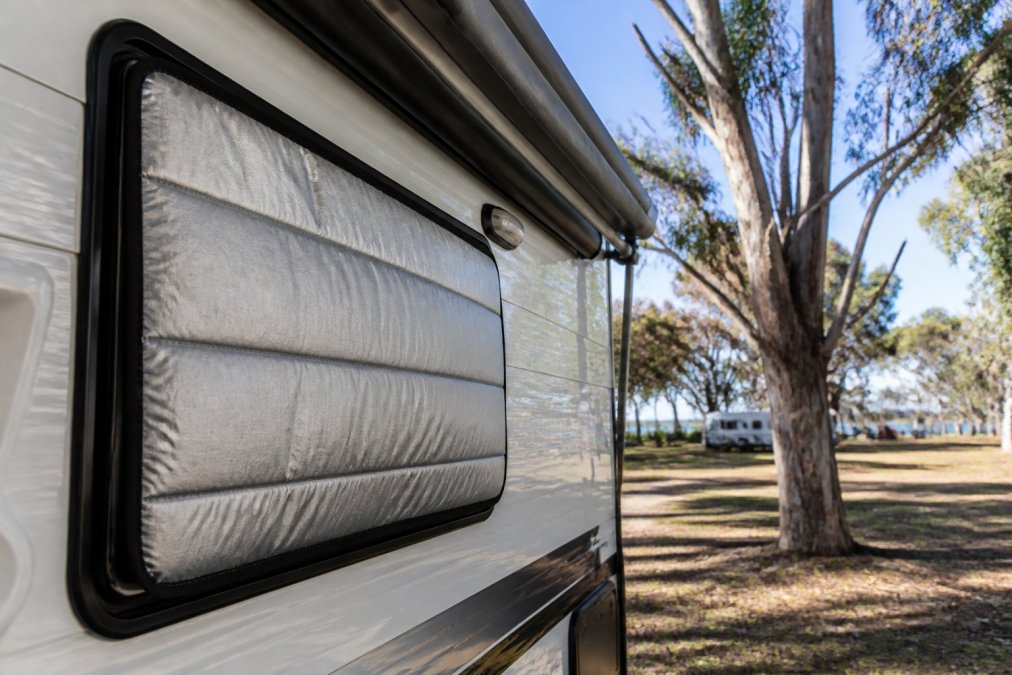
That distinction matters more than most buyers realise. A generic window covering and an approved insulation panel can look identical in a product photo while behaving very differently after two summers of UV exposure and highway vibration. The club's assessment process exists precisely because those differences only show up in service.
The Benefits of CMCA Membership Beyond Discounts
Most pages stop at the perk list. The more useful question is what each benefit actually does for a member, and where the value sits relative to the annual fee. Three areas carry most of the practical weight: fuel and travel discounts, the accommodation directory, and the insurance and financial product disclosures attached to membership.
Fuel, Accommodation, and Insurance Perks
Fuel discount programs are structured as a cents-per-litre reduction at participating outlets, usually capped at a maximum volume per transaction. That cap matters: a member towing a large van and filling a long-range tank will hit it quickly, while a member doing short hops may not. Read the program terms for the cap, the participating sites, and whether the discount stacks with other offers.
The accommodation directory is the benefit most members underrate. It is not a booking platform, it is a curated list of low-cost and free camping options, many of which do not appear on commercial sites. For anyone travelling outside school holidays, that list is often worth more than the fuel savings, because it changes where you can stay rather than how much you pay to get there.
Insurance and financial products sit in a different category again. Any club offering these must provide a product disclosure statement (PDS) and a target market determination (TMD) under the Corporations Act 2001 and ASIC's design and distribution obligations. Those documents set out who the product is designed for, what is excluded, and how claims are handled. Read the PDS rather than a summary, the exclusions are where most disputes start. This is general information only, not personal financial advice, and your circumstances determine what suits you.
Where the Value Actually Sits
The membership fee is best understood as a bundle, not a single product. If you use two of the three pillars heavily, the fee is usually justified. If you use one lightly and two not at all, the maths rarely works, and that is the honest answer most perk-focused pages avoid.
Technical Standards and Safety Compliance for Approved Gear
This is the section most competitors skip, and it is the one that answers the keyword properly. "Approved" is not a marketing label, it is a claim that a product has been assessed against a defined set of criteria. Understanding what those criteria are is what separates an informed purchase from a hopeful one.
What "Approved" Actually Means
A club approval process typically assesses a product across four dimensions:
- Fit and compatibility, does the product mount correctly on the vehicle types it is sold for, without fouling windows, doors, slides or existing fittings?
- Material performance, how do the materials behave under sustained UV exposure, high cabin temperatures, vibration and moisture?
- Safety interaction, does the product interfere with the vehicle's existing safety systems, including gas appliances, electrical circuits, ventilation and egress?
- Documentation and traceability, can the supplier name the manufacturer, the tested configuration, and the warranty terms?
A product that passes all four is genuinely different from one that merely looks the part in a photo. The distinction shows up in service, not on the shelf.
"Approved" Is Not the Same as "Compliant"
This is the gap most buyers miss. A club approval is an internal standard, it is not a substitute for the regulatory requirements that apply to your vehicle. Depending on the product and the vehicle, you may also need to consider:
- Australian Design Rules (ADRs) for vehicle modifications and fittings that affect the vehicle's compliance.
- Gas and electrical safety requirements, which vary by state and territory and apply to any work on gas appliances or 240V circuits.
- State and territory registration and modification rules, which govern what can be fitted and whether the modification needs to be recorded.
A product can meet a club standard and still need to be checked against your specific vehicle's requirements. That is why the compatibility question comes before the brand question, every time.
Australian Manufacturing and Quality Assurance
Australian manufacturing and quality assurance matter for a practical reason: gear designed here is tested against conditions here. UV intensity, summer cabin temperatures and corrugated road vibration are not abstract concerns for anyone travelling in remote areas.
Sign in or Create an Account →
Quality assurance also means traceability.
The Long-Term ROI of Approved vs Generic Gear
None of the ranking pages analyse this, and it is where the financial case actually lives. The comparison is not sticker price against sticker price, it is cost per year of service, plus the cost of failure.
How to Verify Australian Made RV Gear Before You Buy
Verifying Australian made RV gear comes down to documentation, not marketing copy. A legitimate claim is backed by a certification mark, a named manufacturer, or a supplier willing to put the origin in writing.
Work through this checklist before you commit:
- Ask for the manufacturer's name and location in writing
- Check whether the product carries a recognised Australian made certification mark
- Confirm the supplier lists a physical business address
- Request the warranty terms and who honours them
- Ask which vehicle models and years the product is tested against
- Check whether the club partnership is stated publicly by both parties
Best Caravan Accessories for Long-Term Travel
The best caravan accessories for long-term travel are the ones that solve a problem you will face every single day: heat, condensation, storage and power. Window insulation, ventilation and secure mounting hardware tend to deliver more daily value than one-off gadgets.
Compatibility Checklist for Your Vehicle Type
Compatibility is where most online purchases go wrong, so run this before ordering:
| Vehicle Type | Check First | Common Failure Point |
|---|---|---|
| Campervan | Window curvature and trim depth | Panels too rigid for curved glass |
| Caravan | Wall thickness and frame position | Mounting screws too long |
| Motorhome | Cab versus habitation dimensions | Wrong panel for cab windows |
| Slide-on camper | Clearance when slide is retracted | Panels foul the slide mechanism |
Long-Term Value: Approved vs Generic Accessories
Approved accessories usually cost more up front and less over the life of the vehicle. The cost-benefit analysis is not about the sticker price; it is about how many times you replace the item, and what a failure costs you in the middle of a trip.
Frequently Asked Questions
What are the primary benefits of using CMCA approved accessories?
CMCA approved accessories are tested for safety, durability, and compatibility with recreational vehicles. They often come with quality assurance and may help with insurance compliance. For example, approved window insulation can reduce heat and protect interiors. These accessories are designed to meet Australian standards, giving you confidence on the road.
How does CMCA endorsement impact the quality of RV gear?
CMCA endorsement means the product has been reviewed against club criteria for safety and performance. It indicates the gear is suitable for long-term travel and meets technical specifications. This can lead to better durability and functionality compared to non-approved items. Always look for the CMCA logo to ensure authenticity.
Are CMCA approved accessories compatible with all vehicle types?
Not always. Compatibility depends on your vehicle's make, model, and dimensions. Before purchasing, check product specifications and consult compatibility checklists. RvOptions provides guidance to help you choose the right fit for your caravan or motorhome, ensuring safety and performance.
How do I identify genuine CMCA approved products?
Genuine CMCA approved products carry the official CMCA endorsement logo and are listed on the CMCA website or through authorised retailers like RvOptions. You can verify by checking the product packaging or asking the retailer for proof of approval. Avoid unbranded or suspiciously cheap alternatives that claim approval without evidence.
Choosing accessories for a vehicle you live in is a decision about reliability, not just price, and the gap between approved and generic gear usually shows up at the worst possible moment. RvOptions stocks Australian made Solarscreen window insulation and FlatOut Multireels, backed by our long-standing partnership with the Campervan & Motorhome Club of Australia and personalised advice from a team that uses this gear in our own vehicles. Sign in or create an account to see what fits your setup.
Share this post
- Tags: benefits of cmca membership, best caravan accessories for long-term travel, cmca approved accessories, how to verify australian made rv gear, why choose cmca approved accessories