
Tips for Comfortable Long Haul Travel: 2026 Guide
Posted by Editorial Team on
Table of Contents
- Choosing the Best Seat for Long Haul Travel
- Essential Carry-On Items for Long Haul Travel
- Comfortable Clothing and Footwear for Long Flights
- Sleep Aids and Techniques to Beat Jet Lag
- Managing Travel Anxiety and Accessibility Needs
- Budget-Friendly Comfort Hacks for Long Haul Travel
- Post-Flight Recovery Protocols for Long Haul Travel
- Frequently Asked Questions
Last Updated: September 13, 2026
Choosing the Best Seat for Long Haul Travel
Tips for comfortable long haul travel start long before you reach the airport, and seat selection is the highest-use decision you'll make. A window seat lets you lean against the cabin wall to sleep; an aisle seat gives you freedom to stretch and reach the overhead locker without disturbing anyone. For most travellers, the trade-off comes down to bladder frequency versus sleep quality.
Book as early as your airline allows. Seats near the bulkhead offer extra legroom but often have fixed armrests and no under-seat storage, which matters if you're carrying a travel kit you want within reach. Exit rows solve the legroom problem but recline less and sit close to the toilets, where noise and foot traffic peak.
- Window seat: best for sleepers who can hold out between meals
- Aisle seat: best for restless legs and frequent bathroom trips
- Bulkhead: best for parents with infants needing bassinet space
- Exit row: best for tall travellers who don't need to recline
Essential Carry-On Items for Long Haul Travel
A well-packed carry-on is the difference between arriving functional and arriving frayed. Pack for the cabin, not the destination: everything you need for the flight itself should live in one bag you never check.
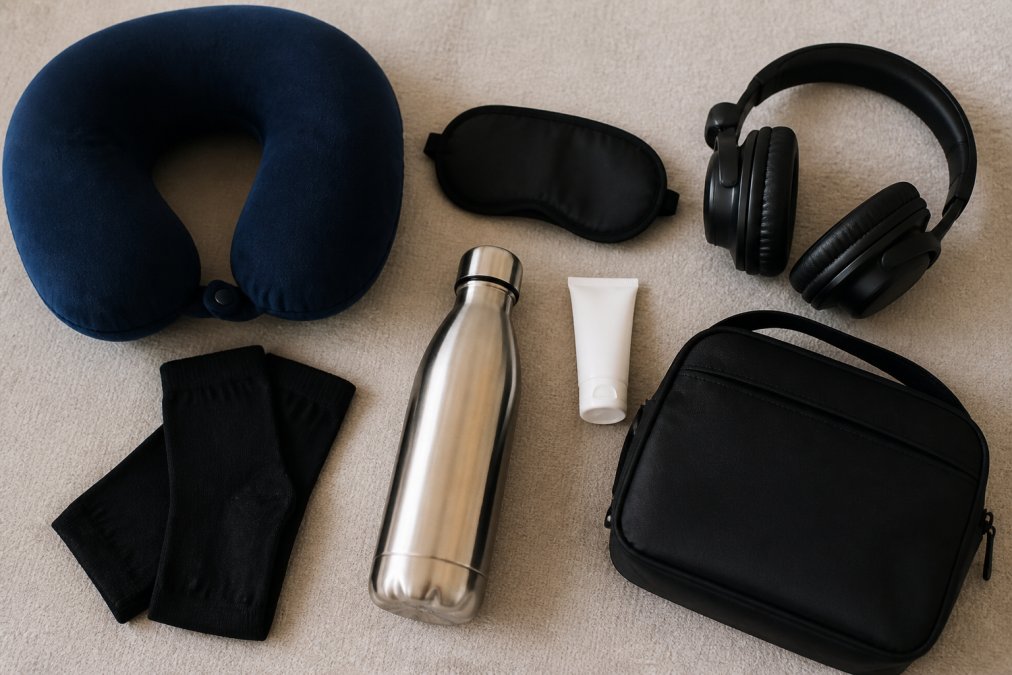
Your carry-on essentials should include a refillable water bottle you fill after security, a compact travel kit with a toothbrush and moisturizer, and a change of socks. Compression socks are non-negotiable on flights over six hours (Deep vein thrombosis (DVT) - symptoms, signs and treatment). A sleep mask and noise-canceling headphones do more for rest than any pillow.
Comfortable Clothing and Footwear for Long Flights
Dress in layers, because cabin pressure and air conditioning make aeroplane temperatures swing between stuffy and freezing. A light merino or cotton base layer, a mid-layer you can shed, and a scarf that doubles as a blanket cover most situations.
Your travel outfit should prioritise circulation and ease. Skip tight waistbands, belts, and anything that digs in when you sit for hours. Slip-on shoes make security faster and let your feet swell without discomfort. Bring a spare pair of socks in your carry-on so you can swap into dry ones mid-flight.
Footwear matters more than most guides admit. Wear your bulkiest shoes onto the plane to save luggage space, but pack a light pair of flats or sandals for the cabin.
Sleep Aids and Techniques to Beat Jet Lag
Jet lag happens because your circadian rhythm stays anchored to your departure time zone. You can't eliminate it, but you can shorten it by adjusting your sleep schedule two to three days before departure and setting your watch to the destination time as soon as you board.
Sleep aids that work on a plane share one trait: they reduce sensory input. A sleep mask, earplugs or noise-canceling headphones, and a supportive neck pillow do more than any supplement. Avoid alcohol and caffeine during the flight; both disrupt the sleep you're trying to bank.
Managing Travel Anxiety and Accessibility Needs
Most long-haul guides assume a relaxed, able-bodied traveller. That assumption leaves out a large share of passengers, and it is exactly where preparation pays off most.
If flying makes you anxious
Flight anxiety is common, and the mechanism is predictable: it feeds on uncertainty and on feeling trapped. You can reduce both before you board.
- Choose an aisle seat near the front. Being able to stand, stretch, and see the cabin crew without climbing over strangers reduces the trapped feeling more than any distraction technique.
- Board early, not last. Settling in before the cabin fills gives you time to arrange your space and speak to crew without an audience.
- Tell the cabin crew. A quiet word at boarding, "I'm a nervous flyer", is a normal request they handle regularly. Many will check in on you during the flight and warn you before turbulence.
- Name the trigger. If take-off, turbulence, or landing is the hard part, plan a specific response for that window: headphones on, a breathing pattern, a familiar podcast. Vague reassurance helps less than a concrete plan.
- Know the turbulence facts. Turbulence is uncomfortable but is not, on its own, a threat to a modern aircraft. Understanding that the plane is built and tested for far worse is more useful than being told to relax.
If anxiety is severe or you have a diagnosed phobia, a GP or psychologist can offer structured support, including exposure-based programs, well before your travel date. Booking that appointment early is itself a comfort measure.
If you have a disability, chronic pain, or sensory needs
Airlines and airports are required to provide assistance, but almost all of it must be requested in advance, not on the day. Australian Government travel and disability assistance guidance sets out what travellers with disability are entitled to request, including wheelchair assistance, priority boarding, and accessible seating.
Practical planning points that make a real difference:
- Confirm mobility equipment in writing. If you travel with a wheelchair or mobility aid, confirm battery type (dry cell, lithium, or spillable) and stowage with the airline before you fly. Rules differ by carrier and by aircraft.
- Request a specific seat, not just "accessible seating". Aisle seats with movable armrests make transferring easier; bulkhead rows suit some mobility aids but have fixed armrests.
- For chronic pain: a small lumbar cushion, an aisle seat for standing breaks, and a rolled scarf behind the neck reduce the load on your back and hips over a long flight. Set a reminder to stand and walk every hour or two.
- For sensory processing needs: noise-cancelling headphones, a sleep mask, and a familiar item in your carry-on reduce overload. Boarding early lets you settle before the cabin gets busy.
- Medication timing. If you take regular medication, plan doses around the flight and carry them in your carry-on, not checked luggage, with a copy of your prescription.
Comfort for these travellers is not about gear. It is about removing uncertainty before the flight so the flight itself holds no surprises.
Budget-Friendly Comfort Hacks for Long Haul Travel
You don't need premium economy to travel well. The best comfort hacks cost almost nothing. Book a seat away from the galley and toilets, board early to settle your bag, and bring an empty bottle to fill after security instead of buying water at the gate.
- Fill your water bottle after security, not before
- Wear compression socks you already own rather than buying new ones
- Use a scarf as a blanket and a rolled jumper as a lumbar support
- Download entertainment before boarding to avoid paid Wi-Fi
- Eat a light meal before the flight, not the heavy airport food
Post-Flight Recovery Protocols for Long Haul Travel
Most guides end at the gate. The first 24 hours after landing decide how the next two or three days feel, so treat arrival as part of the trip, not the end of it.
The first hour after landing
- Get daylight, not a nap. Natural light is the strongest signal your body clock uses to reset. Step outside or sit near a window within an hour of arrival, even briefly.
- Drink water before coffee. Cabin air is dry and dehydration worsens headaches, fatigue, and jet lag. Rehydrate first, then have caffeine only if it fits your destination's daytime.
- Move gently. A walk through the terminal, a short stroll outside, or light stretching restores circulation after hours of sitting and reduces stiffness.
The first day
- Stay awake until local bedtime. This is the single most effective reset. If you must nap, keep it under about 90 minutes and before mid-afternoon.
- Eat on the destination's schedule. Better Health Channel guidance on jet lag recommends adjusting meal times to the destination schedule to help your circadian rhythm catch up. A light meal at a local mealtime does more than a heavy one at your body's old mealtime.
- Get outside in the morning if you've flown east. Morning light advances your clock; evening light delays it. If you've flown west and need to stay up later, evening light helps.
- Keep moving. A swim, a walk, or 10 minutes of stretching in the evening reduces restlessness and helps you sleep at the right time.
What to avoid
- Don't chase sleep with alcohol. It fragments sleep and worsens dehydration.
- Don't schedule anything demanding on arrival day. A buffer day is not wasted time; it is what makes the rest of the trip work.
- Don't drive while fatigued. If you're picking up a caravan or motorhome, give yourself a full day before towing or driving on unfamiliar roads. Fatigue and an unfamiliar vehicle are a poor combination.
Frequently Asked Questions
What is the best way to maintain cabin temperature during long-haul travel?
Cabin temperature fluctuates during long haul travel, so layering is key. Wear a breathable base layer, add a light jumper or cardigan, and keep a compact blanket or scarf in your carry-on. Choose a seat away from galley areas, which tend to be colder, and avoid seats near the door where drafts are common. Compression socks help regulate circulation when the cabin cools.
How can I improve ventilation and comfort in my seat during a long flight?
Adjust the overhead air vent to blow gently toward your face, which helps reduce stuffiness and motion sickness. Stand up and stretch every two hours to improve circulation. Wear loose, breathable fabrics and avoid heavy meals before boarding. Aisle seats offer easier access for movement, and booking a seat away from the rear galley reduces noise and foot traffic.
What are the essential comfort accessories for long-haul travel?
A good neck pillow, sleep mask, noise-canceling headphones, compression socks, and a refillable water bottle form the core of any travel kit. Add moisturizer and lip balm for dryness caused by cabin pressure, and pack a lightweight blanket or scarf. A small pouch for medications, chargers, and snacks keeps everything accessible without digging through your bag.
How do I manage jet lag on a long-haul flight?
Start adjusting your sleep schedule a few days before departure by shifting bedtime closer to your destination's time zone. Set your watch to the destination time as soon as you board, and sleep according to that schedule. Stay hydrated, avoid alcohol and caffeine, and get daylight exposure at your destination as soon as possible to reset your circadian rhythm.
What should I wear for maximum comfort on a long-haul flight?
Choose loose, breathable fabrics like cotton or bamboo blends that allow movement and regulate temperature. Avoid tight waistbands and restrictive clothing. Wear supportive, easy-to-remove shoes because feet swell during long haul travel, and pack compression socks to improve circulation. A light scarf or wrap doubles as a blanket or pillow.
How can I prepare psychologically for travel anxiety on a long flight?
Acknowledge your anxiety before the flight and prepare coping strategies in advance. Breathing exercises, guided meditation apps, and distracting entertainment help manage stress. Inform cabin crew if you need support; they are trained to assist nervous flyers. Booking an aisle seat gives you a sense of control and easy access to move around when needed.
Long-haul travel wears you down, but it doesn't have to ruin the first days of your trip. RvOptions has helped travellers gear up since 2009, and our Australian-made Solarscreen window insulation, CMCA partnership, and range of travel accessories are built for people who spend real time on the road. Get started with RvOptions and arrive ready for the adventure ahead.
Share this post
- Tags: caravan insulation tips, long haul travel, maintaining caravan temperature in extreme heat, off-grid cooling solutions for rvs, tips for comfortable long haul travel